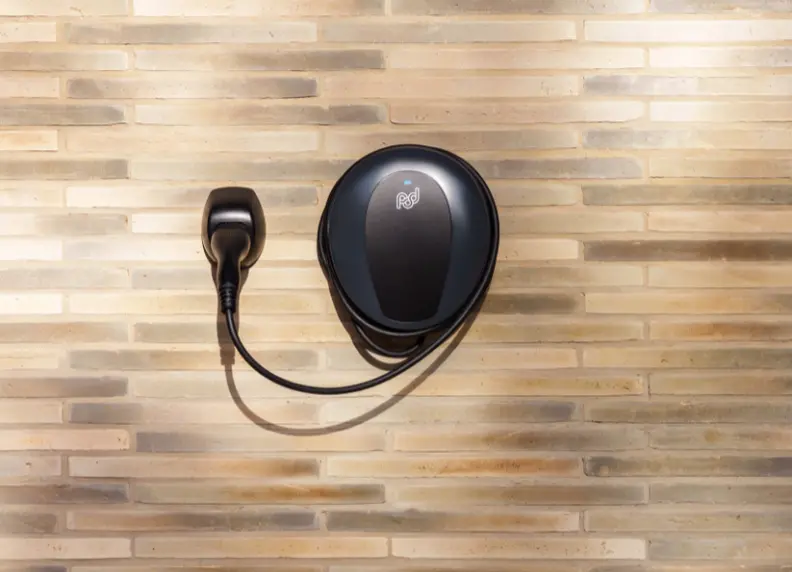
Cable stays on the charger
Easiest if it reaches the place you usually park.

Home EV charging
Understand your options, prepare for installation, and charge with confidence.
Understand
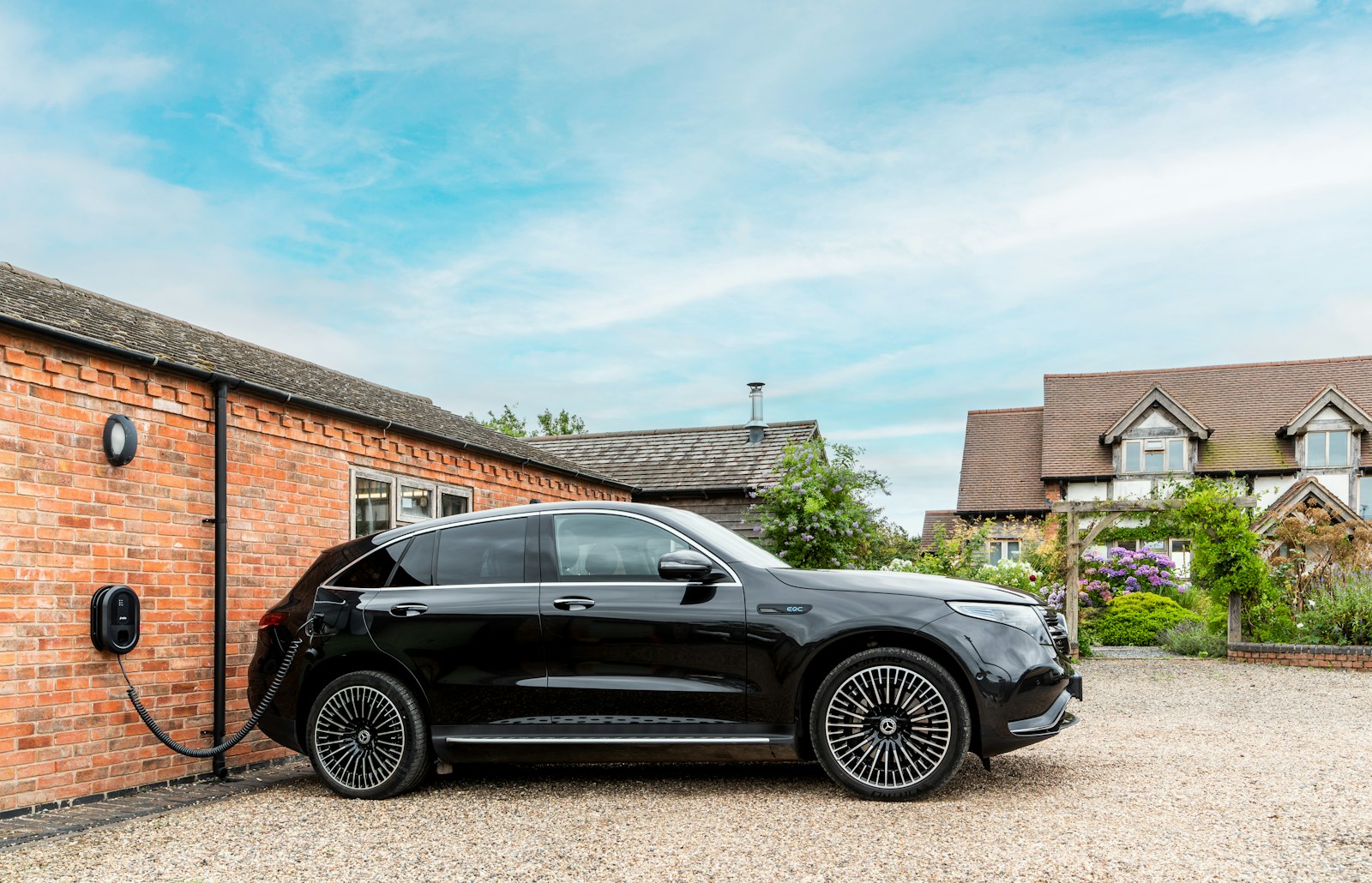
A home charger supplies AC. The car turns that into DC for the battery. Public rapid chargers do the conversion outside the car, at much higher power.
Easiest if it reaches the place you usually park.
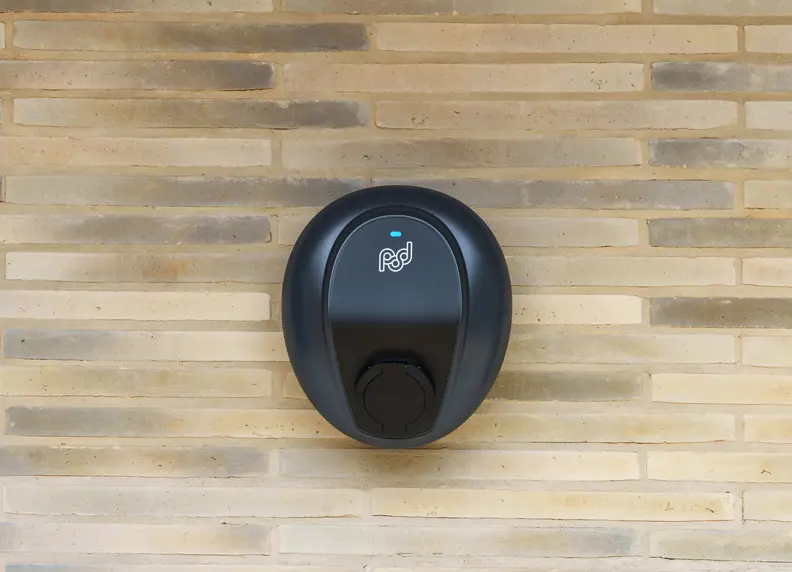
Useful if cars or parking spots change. You need somewhere to store it.
Neither is automatically faster. Match the connector and the cable rating to the car.
Charging power. About 7.4 kW is common on a single-phase UK supply.
Energy delivered. One hour at 7.4 kW is about 7.4 kWh at the charger. Less reaches the battery.
~22 miles
illustrative range added in one hour at 7.4 kW
Assumption: about 3 miles per kWh, before weather, losses and the car’s own limit. A low battery can take more than one night, especially in a short off-peak window. A schedule changes when you charge, not the charger’s maximum power.
Three-pin sockets. A dedicated chargepoint is the everyday choice. A portable lead needs the vehicle instructions and an electrician’s confirmation that the circuit can sustain charging. Do not use extension leads or multiway adaptors.
Most UK homes are single-phase. Three-phase can support 11 kW or 22 kW only when the charger and the car both allow it. A car with a lower AC limit cannot use the extra capacity. Ask the installer whether any supply work is worth it.
Bidirectional charging lets a compatible car supply electricity as well as take it. Vehicle-to-grid supplies the grid. Vehicle-to-home supplies the house. Backup during a power cut needs equipment designed for that. An ordinary home charger includes neither.
Installation & safety
You do not specify the components. You should understand what is provided, and receive evidence the work was tested. Safety measures are not dropped to fit a package.
An RCD detects specified leakage. An RCBO also covers overload and short circuit. A common EV arrangement is Type A protection plus 6 mA DC detection. Other designs use Type B. Detection inside the charger does not automatically replace every RCD. The installer checks the whole chain, including devices upstream.
Some supplies need a precaution against a break in the network’s combined earth and neutral, called an open-PEN fault. The right approach depends on that supply. Ask the installer to explain the one used at your home.
A surge device limits brief spikes. That is a different job from leakage or overload protection. Ask whether what is already fitted is enough.
The cable should reach without crossing a path. A straight-line measure often misses corners. On-street parking needs the council’s approved crossing. Do not trail a cable over the pavement. Renting, leasehold or shared parking needs written permission before booking. Planning permission and highway permission are separate. Grant rules are on GOV.UK.
If the car is there, charge it once together. If not, ask how the first connection will be supported.
Everyday use
Use the charge limit your car recommends. There is no single percentage for every EV.
Either you choose the times, or your supplier charges to a target and a ready-by time. Use one arrangement. A second timer can block the session.
If there is no smell, heat or damage: read the messages, seat both connectors, check the schedule and target, then look for a second timer.
Check the setup again after a new car, app or tariff. Some chargers wait before they start. That wait is not automatically a fault. For a charge now, use the documented boost. Do not bypass protection. Boost may fall outside your cheaper hours.
Use the documented release. Do not pull the connector or take it apart. A slower rate can be the car, the schedule, or load management. Repeated unexplained stops need a look. Follow the manufacturer’s checks, then contact support.
Loss of Wi-Fi or mobile signal does not always stop charging. App control and off-peak schedules may change. Do not assume cheap-rate charging continues. Install updates only through the manufacturer’s process, and keep recovery details secure.
Use the holder or cover. Keep the cable clear of water, wheels and doors, without tight bends. Look for cuts, cracked casing and damaged pins. Do not put tools or fingers in the connector, open the charger, or repair it. Outdoor-rated equipment is not safe to use if it is damaged or has been flooded.
Burning smell, smoke, scorching, melting, a damaged cable or case, unusual heat, sparking, flooding, impact, or a breaker that keeps tripping.
Do not touch damaged, hot or flood-affected equipment. Do not keep resetting a tripping device. Use the isolation point only if you know how and can reach it safely.
Fire, smoke or immediate danger: move away and call emergency services.
Model and serial number, installation date, electrical certificate, Building Regulations record where it applies, both warranties, and app recovery details. The product warranty and the installation warranty cover different things.
Choose a charger, ask about your own installation, or contact support.
Current can explain this guide and arrange a follow-up. Chat is not design approval, fault clearance or emergency help. For an electrical fault, use qualified support. For immediate danger, call emergency services. Email customer.service@pretiumsynergy.co.uk with the model, the message on screen, and a photo taken from a safe place.